
Table of content:
What is Cross-border Surrogacy?
Knowledge of Customs Regulations
Releasing (Exporting) Clinic or Cryobank
Important Timing Considerations
Tailored Hybrid Surrogacy Solutions
The war has changed the world as we know it, and the area of infertility treatment couldn’t stand aside. If previously cross-border surrogacy was used by 1 couple out of 20, now, due to border closures and instability, almost every fifth couple inclines towards this kind of combined treatment program.
What is Cross-border Surrogacy?
It is not a secret that surrogacy, for most Intended Parents, is the final stop on the road of infertility treatment. Before that step, they have undergone numerous IVF cycles using their own eggs or donor eggs. Some couples have embryos vitrified and stored in the clinics where they previously had IVF or egg donation programs. If the Intended Parents decide to proceed with surrogacy, these embryos can be used, subject to certain conditions. Thus, when embryos have been created in one country and shipped to another country for surrogacy, such a program is often called cross-border surrogacy.
Courier Companies
The development of cryopreservation techniques, particularly vitrification, significantly increased the quality of frozen material, allowing clinics to use thawed embryos or gametes without losing their quality. Various biological cryoshippers are available on the market. But what criteria are essential to consider when choosing a company?
Transport Equipment
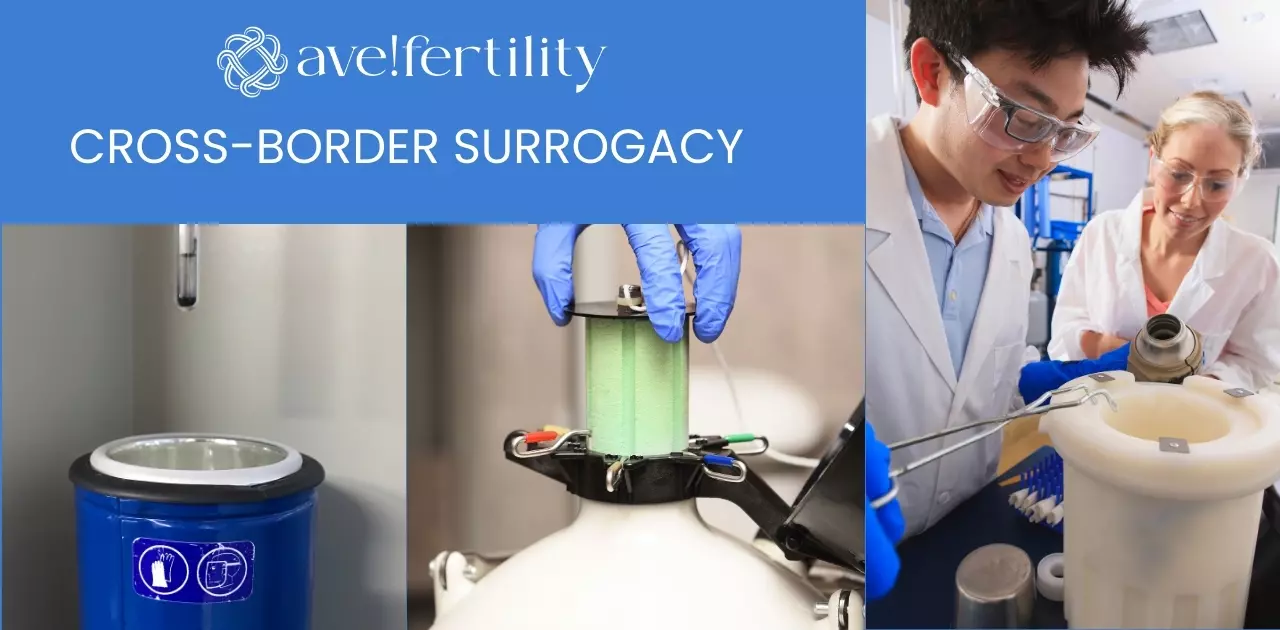
For international biological transportations, companies use containers called dry shippers. A dry shipper is a container with a stainless-steel canister placed into liquid nitrogen. The straws with vitrified embryos or gametes are stored inside the canister. Dry shippers are equipped with data loggers that trace the temperature inside. The dry shipper is placed inside an outer plastic shipping case and transported in the aircraft cabin, not the luggage compartment. The embryos and gametes transported in such containers are not subject to X-ray checks at the airport, as this kind of exposure can cause DNA mutations in the transported material.
Knowledge of Customs Regulations
A reliable courier should be aware of the customs regulations of both the exporting and importing countries. Otherwise, the container with your embryos may get stuck at the border. The good news is that modern dry shippers can hold the temperature for 10 to 21 days, which is usually enough time to settle formalities or, in the worst-case scenario, return the dry shipper to the starting point. To avoid any holdbacks, both the releasing and accepting clinics should prepare all documents correctly.
Accepting (Importing) Clinic
In some countries, like the UK, regulations require that a clinic can release embryos only to an HFEA-approved clinic. The importing clinic should provide documents such as licenses, accreditation, and Standard Operation Procedures, including patient identification procedures. The shipping company usually doesn’t require these documents as they are not part of their work. There certainly is logic in such an approach towards the Clinic that is allegedly accepting the embryos. First, to avoid the possibility of mistakes due to human factors, there are specific standards for laboratories handling the gametes, reproductive tissues, and embryos that have to be adhered to — failure to do so in some cases may lead to irreparable damage and the Intended Parents may lose their last chance for parenthood through surrogacy.
Releasing (Exporting) Clinic or Cryobank
The releasing clinic must provide details about the embryos or gametes to be used in the surrogacy program. Required information includes the protocol of embryo creation indicating whose genetic material was used in the IVF procedure. According to Ukrainian legislation, one of the Intended Parents must be genetically related to the baby in the case of surrogacy. The embryo quality, helps the fertility specialist in the importing clinic estimate the chances of program success.
The releasing clinic should also provide details of vitrification and storage, such as the medium used, how the embryos are located in the straws, and the color identification of those straws. This information helps the receiving lab thaw and cultivate the embryos correctly. Additionally, blood test results for HIV, Hepatitis B, Hepatitis C, and syphilis from the Intended Parents (or the Intended Parent and the Donor) who donated their gametes must be provided. These tests should be done within a 90-day window before embryo creation. While these tests will likely be repeated during the initial consultation, the initial results from the releasing clinic are crucial to ensure the viral-free status of the embryos or gametes, ensuring the safety of other stored embryos/gametes and the surrogate mother.
Important Timing Considerations
Once all parts of the puzzle are in place, it’s time to start the procedure. Cross-border surrogacy doesn’t eliminate the need for documents required to qualify for a surrogacy program in a selected country. After settling all formalities, you can launch the shipping process with the courier company. To ensure proper timing, it’s advised not to start preparing the surrogate mother until the embryos are in place.
Tailored Hybrid Surrogacy Solutions
At AVE Fertility, we have created comprehensive hybrid surrogacy programs in Ukraine, Cyprus, the USA, Mexico, Argentina, and Guatemala, tailored to meet Intended Parents’ requirements. Regardless of marital status, sexual orientation, or financial situation, anyone can find the perfect surrogacy program in one of our carefully selected locations. Moreover, we have developed the Program Locator. This tool helps you choose the best destination for your surrogacy journey in just a few minutes, considering your specific needs and preferences.
With our extensive experience and dedication, AVE Fertility is ready to arrange the entire process for you, ensuring a seamless and supportive surrogacy journey.